

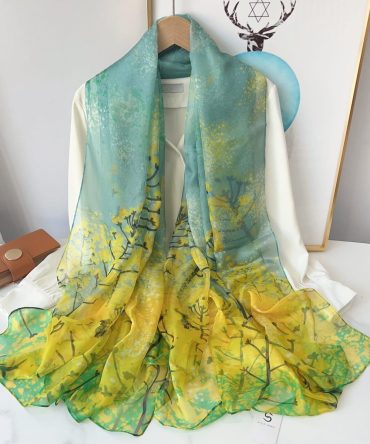


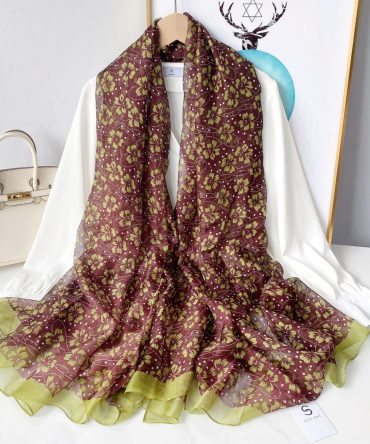

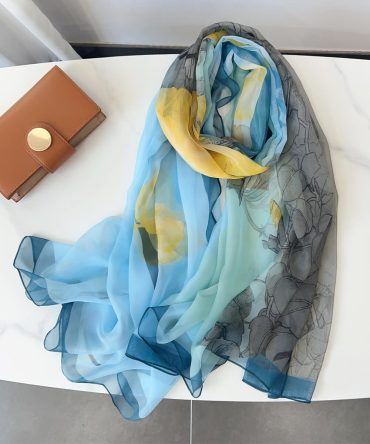
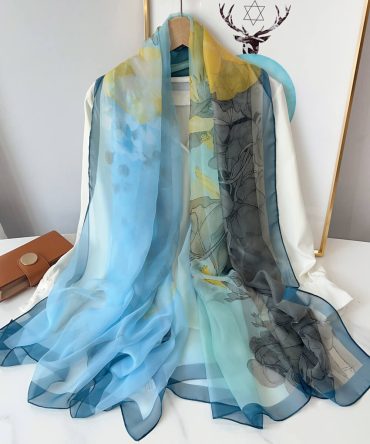







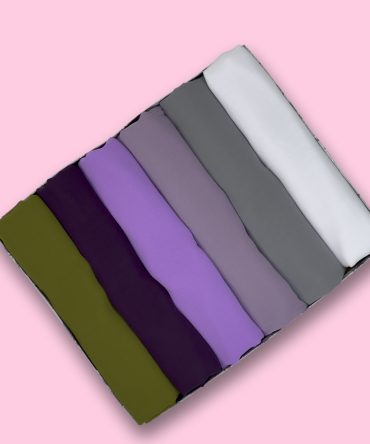

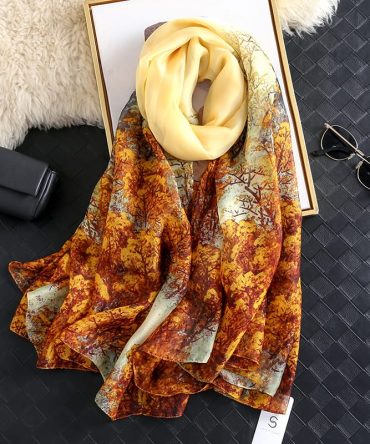
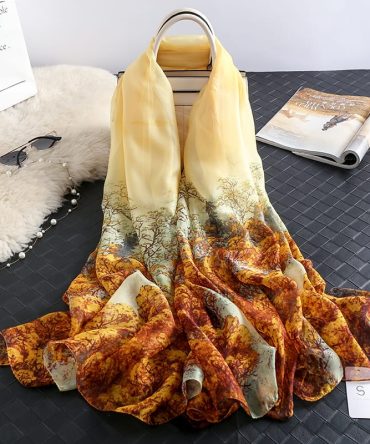
Why Chiffon Is the Default Hijab Fabric in the Gulf
Walk into any office, mall or wedding hall in Dubai and count the chiffon scarves. It will be most of them. There's a reason this fabric became the everyday standard across the UAE rather than a seasonal choice. Chiffon is woven from tightly twisted yarns, which gives it a slightly crinkled, matte surface and an airflow that heavier fabrics simply can't match. In a country where the outdoor temperature sits above 40 degrees for a third of the year and every interior is aggressively air conditioned, a hijab fabric needs to do two contradictory jobs at once: block the sun without trapping heat against the skin, and still look polished when you walk from a car into a cold lobby. Chiffon does both because it's thin enough to breathe but has enough body to hold a drape instead of sticking to your neck.
Cotton and jersey are common in cooler climates because they're forgiving and soft, but in humidity they cling, wrinkle fast and take a long time to dry after a light sweat. Chiffon dries almost instantly and doesn't hold moisture the way knit fabrics do, which is why it dominates on the street and in most hijab collections built specifically for the region, including ours at Layl.
The Practical Case: Heat, Humidity and All-Day Wear
If you're commuting between an air conditioned car, an air conditioned office and a humid car park in between, your hijab is getting tested constantly. A thicker fabric will feel damp by midafternoon. Chiffon stays light against the scalp, doesn't trap heat the way a heavier weave does, and its slight sheerness actually helps, since a single layer breathes even when styled with two wraps for coverage. This is the main reason searches for the best fabric for hijab in heat almost always land on chiffon as the answer rather than silk or cotton.
What Chiffon Actually Is (And Why It Needs an Underscarf)
Chiffon isn't a fiber, it's a weave. You'll find it made from polyester, silk or a blend, and in hijab collections the vast majority is polyester or a poly-silk blend because it holds colour better, resists creasing, and survives UAE summers and washing machines without losing shape. The weave itself is a plain weave using alternating S-twist and Z-twist yarns, which is what creates that faint puckered texture and the fabric's characteristic soft, grainy hand-feel.
Because the yarns are woven loosely and the fabric is thin, chiffon is semi-sheer by nature. This isn't a flaw, it's the trade-off that gives it drape and airflow. It does mean a plain chiffon scarf on its own will show hairline and scalp shadow, particularly in direct sunlight or under indoor lighting. This is why every chiffon hijab is meant to be worn with an inner cap or underscarf. The cap does the actual coverage work, holding hair in place and creating an opaque base, while the chiffon layer on top handles the styling, movement and finish. Skipping the cap is the most common styling mistake with this fabric, and also the reason some people wrongly assume chiffon "isn't modest enough." Paired correctly, it's one of the most reliable everyday options there is.
Chiffon vs Georgette vs Crepe: What's the Real Difference
These three get lumped together often enough that it's worth being precise, especially since georgette hijab searches are usually people trying to figure out if it's the same thing as chiffon.
Georgette
Georgette is a closer cousin to chiffon than either is to crepe. It uses the same twisted-yarn technique but with a tighter, heavier weave, which makes it more opaque and slightly grippier to the touch. A georgette hijab often needs less pinning because it has more texture to hold a wrap in place, and it drapes with a bit more structure rather than chiffon's fluid slip. If you find chiffon too sheer even over a cap, or you want a scarf that holds an updo style without constant readjusting, georgette is the fabric to move toward.
Crepe
Crepe is heavier again, with a matte, slightly textured surface and almost no shine. It has the most structure of the three, drapes in cleaner lines, and is the most opaque without any lining needed. It's excellent for sharper, more architectural styling and for cooler months, but it doesn't breathe like chiffon does and can feel warm in peak summer.
Where Chiffon Wins
For sheer everyday wear in heat, chiffon still wins on weight and airflow. Georgette wins on grip and modesty coverage without a cap doing all the work. Crepe wins on structure and opacity. Most people end up owning a mix, chiffon for daily rotation and hot months, georgette or crepe for events or cooler days.
Why the Inner Cap Isn't Optional
Beyond solving sheerness, a good underscarf changes how a chiffon hijab actually behaves on your head. Chiffon has almost no natural grip, so without something underneath for it to sit against, it slides. A cotton or jersey inner cap gives the scarf a surface with slight friction, keeps front sections from shifting during the day, and stops the fabric from flattening your hairline in a way that looks unintentional. It also solves the practical issue of sweat and scalp oil transferring directly onto a delicate fabric, which shortens its life and leaves marks that are hard to wash out. A cap absorbs that instead. If you're new to chiffon and finding it frustrating to keep in place, the fabric usually isn't the problem, the missing layer underneath is.
Styling and Draping: Working With the Slip, Not Against It
Chiffon's slight slip is the same property that gives it its drape, so the goal isn't to eliminate it, it's to control where it happens. A few things make a real difference:
Pin at the pressure points, not everywhere. One pin under the chin and one at the shoulder or ear, on top of a cap that's already anchoring the base, is usually enough. Over-pinning fights the fabric's natural movement and creates awkward bunching instead of a clean line.
Let the length do the work. Longer chiffon rectangles, generally from around 180 to 220 centimetres, give you enough fabric to wrap twice without pulling the first layer tight against your scalp. A shorter length forces tension, and tension is what makes chiffon slide.
Iron on low heat or steam instead of a hot iron directly on the fabric. Chiffon holds a soft crease, not a sharp one, and pressing it flat like a cotton shirt kills the drape that makes it look expensive in the first place. A handheld steamer hung over the fabric for a few seconds does more for how it falls than an iron ever will.
Choose weight for the occasion. A finer, almost weightless chiffon looks better draped loosely and worn open at the front. A slightly heavier chiffon, sometimes labelled crinkle chiffon or bubble chiffon, holds a wrapped or turban style with less readjusting through the day.
Caring for Chiffon: Washing, Drying and Storage
Chiffon rewards a little care and punishes carelessness fairly visibly, since snags and rough handling show up more on a sheer fabric than a dense one. Hand washing in cool water is the safest route, but if you're using a machine, a mesh laundry bag on a delicate cycle with cold water protects it from snagging on zips or velcro from other items. Skip fabric softener, it tends to dull the slight sheen polyester chiffon has and can leave a residue that attracts dust over time.
Wring gently rather than twisting, and dry flat or on a padded hanger away from direct sun, since prolonged UV exposure is what fades chiffon's colour faster than the washing itself does. Store pieces flat or loosely rolled instead of folded on a hard crease line for months, since sharp permanent creases are difficult to steam out of a fabric this thin.
Buying Chiffon Hijabs Online in the UAE
Shopping for a chiffon hijab UAE wide online mostly comes down to trusting fabric weight and colour accuracy without touching it first, which is why product descriptions and honest photography matter more here than in almost any other category. At Layl, chiffon pieces are priced from around AED 45 depending on finish and length, with matching inner caps sold separately so you can build the combination that suits your styling. Orders above AED 200 ship free, and every order can be paid on delivery, through Apple Pay, or split with Tabby or Tamara if you're building out a full rotation at once. Delivery covers Dubai, Abu Dhabi, Sharjah and the rest of the UAE, typically arriving within one to three business days, so a chiffon hijab Dubai order placed in the morning is often on your doorstep well before the weekend.
Frequently Asked Questions
Is chiffon too sheer to wear as a hijab?
On its own, yes, chiffon is semi-sheer by design. Worn over a proper inner cap or underscarf, which is standard practice for this fabric, it provides full coverage while keeping the lightness that makes it comfortable in heat.
What's the difference between a chiffon hijab and a chiffon scarf?
Functionally, not much. A chiffon scarf is the general term for the fabric piece, while chiffon hijab describes how it's worn and styled for coverage, usually longer in length and paired with an underscarf. Many people use the terms interchangeably when shopping.
Does chiffon wrinkle easily, and how do I fix it without ruining the fabric?
Chiffon does crease, especially polyester blends after folding, but it releases wrinkles easily with steam. A quick hang in a steamy bathroom or a few passes with a handheld steamer smooths it out without the flattening effect a hot iron causes.
Is chiffon or georgette better for someone new to wearing hijab?
Georgette is often easier to start with because its tighter weave grips better and needs fewer pins to stay put. Chiffon takes slightly more practice to style confidently, but its breathability makes it worth learning, particularly for anyone wearing it daily through UAE summers.