The word “hijab” is used every day, but its meaning is broader than many people realise. This is a simple, respectful explainer on what a hijab is, where the word comes from, and the different styles that fall under it.
What the word means
In Arabic, hijab comes from a root meaning “to cover” or “to screen.” In everyday use today, it most often refers to the headscarf worn by many Muslim women that covers the hair, ears and neck while leaving the face visible. More broadly, the term also describes a principle of modesty in dress and behaviour, which is why you will sometimes hear “hijab” used to mean modest clothing as a whole rather than one specific garment.
Why it is worn
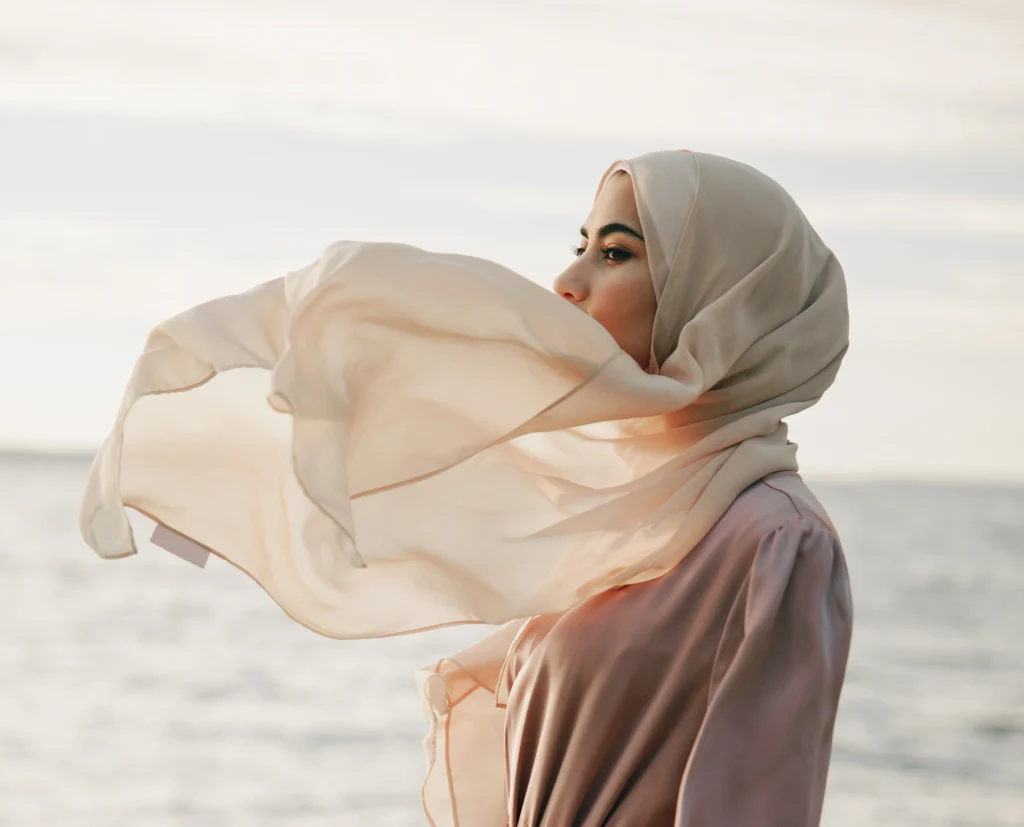
For most women who wear it, the hijab is an expression of faith and personal identity, a practice rooted in religious teaching about modesty. Beyond religion, many also describe it as a matter of comfort, culture, family tradition or personal choice. It means different things to different people, and the decision to wear it, how, and when is a personal one. This guide describes the garment and its styles rather than making any religious ruling.
The main types of headwear
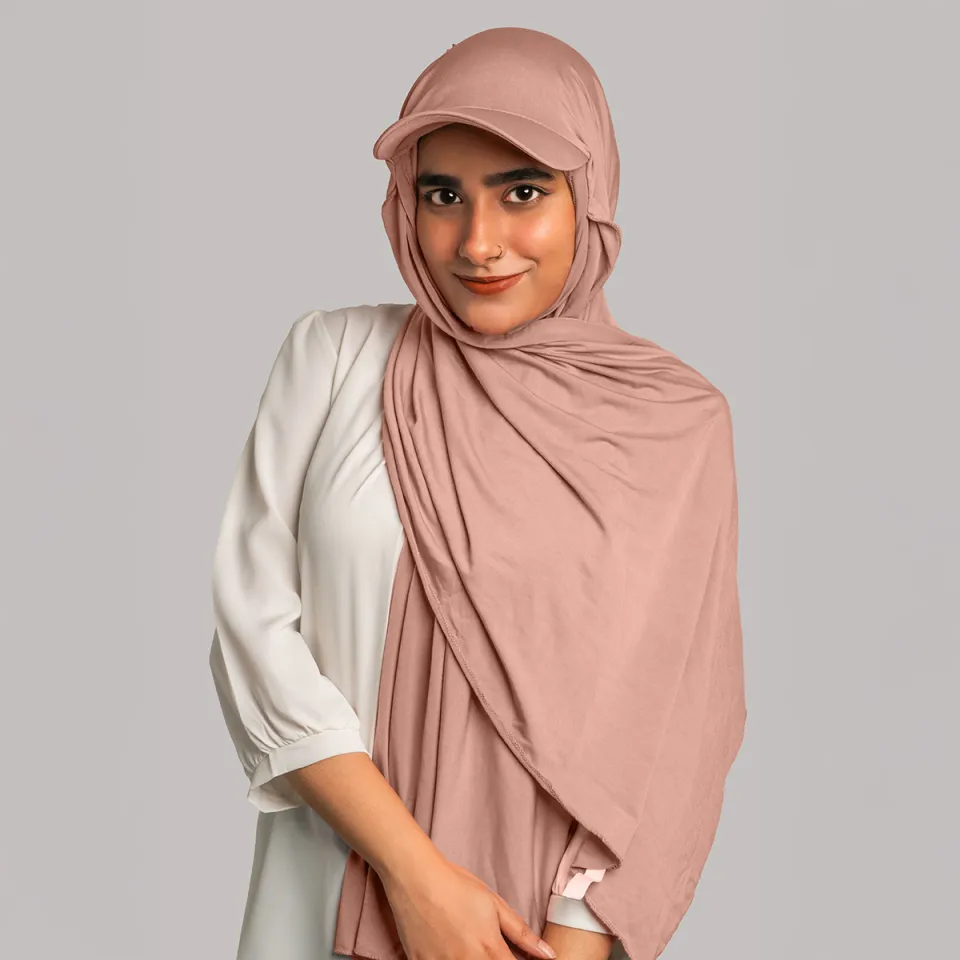
Several related garments are often grouped together, and knowing the difference helps when you are shopping:
- Hijab: the general headscarf covering hair and neck, face visible. Comes as a long rectangle or a square.
- Sheila (or shayla): the long rectangular scarf popular across the Gulf, usually draped and lightly pinned. See our sheila and rectangle hijabs.
- Khimar: a longer cape-like veil that drapes over the shoulders and chest.
- Niqab: a face veil worn with a headscarf, leaving the eyes visible.
- Burka: a full-body covering that also veils the face, most associated with specific regions.
- Turban / underscarf: a fitted cap worn on its own or as a base under a hijab, part of our caps and turbans range.
Hijab fabrics you’ll come across
The fabric changes how a hijab feels and drapes. Jersey and modal are soft, stretchy and easy for everyday; chiffon is light and flowing for a dressier look; cotton and viscose are breathable for warm climates; and silk is the occasion choice.
The takeaway
A hijab is both a specific garment, the headscarf, and a wider idea of modest dress. The styles vary by region, fabric and personal taste, from a simple everyday jersey wrap to an elegant draped sheila. If you are choosing your first, start with a comfortable, breathable fabric in a neutral colour and build from there.