Olive: The Neutral That Isn't Trying Too Hard
There is a particular shade of olive that shows up in every serious wardrobe eventually, and it rarely announces itself. It sits quietly next to camel and stone, does more work than black, and photographs better than most greens ever will. An olive scarf reads as considered rather than decorated, which is precisely why it has moved from military surplus racks and utility jackets into everyday styling. At Layl, this shift is the whole point of the category: olive and khaki pieces built for daily wear, not costume.
The word olive covers a surprisingly wide range once you start looking closely. It can lean warm and dusty, almost like a faded fatigue jacket, or it can tip toward a deeper, near-black green that only reveals its undertone in direct light. What unites every piece here is that yellow-brown cast running underneath the green. It is what separates an olive hijab from something merely green, and it is why this shade earned its own place on the site rather than getting folded into a general green rail.
Olive Versus Green: Why We Keep Them Apart
Customers ask us fairly often why olive scarves and green scarves live in separate categories on Layl, given that both start from the same side of the colour wheel. The answer comes down to undertone, and undertone changes everything about how a fabric behaves against skin and against other colours.
True greens on this site, think sage, mint, emerald, forest, are built on a blue or neutral base. They sit cool. Olive and khaki sit warm, pulled toward yellow and brown the way a worn leather jacket or a dried eucalyptus leaf is warm. Put an emerald hijab and an olive one side by side and the difference is obvious within a second, even though a product photo taken under poor lighting might blur the line. Keeping the categories separate means that when someone searches specifically for a khaki scarf or an olive green hijab, they are not wading through mint and forest shades to find it. It also means the styling advice actually applies. What flatters a cool emerald does not always flatter a warm olive, and lumping them together does a disservice to both.
From Pale Khaki to Deep Olive: Reading the Range
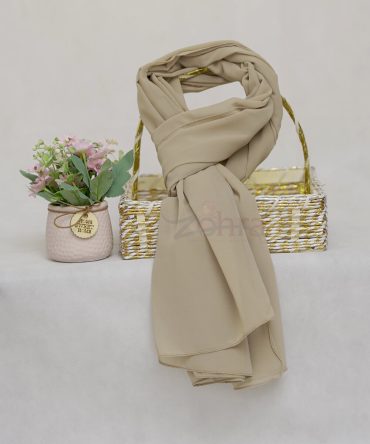
Within the category itself, there is a gradient worth understanding before you buy. Pale khaki sits closest to sand and taupe, a soft, almost dusty green-beige that works beautifully as an everyday neutral and pairs with nearly everything in a warm-toned wardrobe. Mid-tone olive is the classic, the shade most people picture when they hear the word, grounded and a little earthy without reading as drab. Deep olive moves toward bottle green territory, rich enough to stand in for black in evening dressing but with far more personality once light hits it.
Lighter khaki tones tend to suit fairer or more muted colouring, since they don't fight for attention the way a saturated shade might. Mid and deep olive generally flatter a wider range of skin tones, from warm olive complexions (the coincidence of terminology is not lost on us) to deeper skin, because the warmth in the fabric echoes warmth already present in the skin rather than competing with it. If your skin has cooler, pinkish undertones, a deep olive with a slight ash cast will likely sit better than a yellow-heavy khaki, which can occasionally wash out cooler complexions under artificial light.
Fabric Notes: Silk, Chiffon and Cotton Behave Differently in Olive
Colour is only half the story. The fabric an olive scarf is woven from changes how that colour actually reads on the body, and this is where a lot of online shopping goes wrong because photos flatten texture.
An olive silk scarf carries a natural sheen that makes the colour shift subtly depending on the light source, sometimes reading almost bronze under warm bulbs, sometimes cooler and more grey under daylight. This makes silk the most versatile option for anyone who wants one olive piece that can move between daytime and evening. Chiffon, by contrast, is matte and airy, so the olive stays more consistent and true regardless of lighting, which is why it tends to be the easier everyday choice for a hijab worn for hours at a stretch. It drapes softly rather than clinging, and takes to draping styles that need a bit of movement. Cotton olive scarves sit at the practical end of the range, densest in feel, least prone to slipping, and generally the most forgiving fabric for anyone new to wearing a structured olive tone rather than a printed or patterned one. If you're deciding between the three, think about how many hours the piece needs to hold its shape and colour rather than which one photographs best on a hanger.
Styling Olive Against Neutrals and Denim
Olive was made to sit next to neutrals. Cream, ivory, camel and warm grey all let the khaki or olive tone do the talking without any colour competing for attention, which is why so many minimalist wardrobes default to exactly this pairing. Black works too, though it sharpens the olive and makes it read more formal, more evening than daytime.
Denim is the other obvious partner, and it is obvious for good reason. Olive and blue denim share just enough contrast to look deliberate without looking mismatched, and the combination has carried entire decades of casual dressing on its back. A khaki scarf over a denim jacket, or an olive hijab with straight-leg jeans and white trainers, is about as close to a foolproof outfit as exists in this colour family. Where people go wrong is adding a third strong colour into the mix. Olive already carries visual weight, so the rest of the outfit generally benefits from staying quiet.
Styling Olive Against Gold
The other pairing worth mentioning, because it surprises people the first time they try it, is gold. Gold jewellery, gold embroidery, even a warm gold-toned abaya underneath, brings out the yellow-brown undertone in olive in a way that silver simply doesn't. Silver tends to cool the whole look down and can make khaki read slightly flat. Gold does the opposite: it warms the fabric and gives it a kind of richness that makes even a simple cotton olive scarf look considerably more put together. This is the pairing to reach for when an olive piece needs to move from a daytime outfit into something for a dinner or a gathering without changing the scarf itself.
Where an Olive Scarf Actually Gets Worn
Practically speaking, olive earns its keep because it doesn't restrict itself to one register. A cotton or chiffon olive hijab works for the office in a way that brighter colours sometimes don't, reading as put-together rather than attention-seeking in a meeting. The same shade in silk, styled with a bit more drape, moves easily into evening territory, especially in the deeper olive tones that edge toward black-green. It also travels well, in the literal sense: olive hides dust and travel creasing better than pale colours, which matters if you're wearing it through an airport or a long day out in Dubai's heat.
Layered dressing is where olive really shows its range. Worn under a beige or camel abaya, it adds depth without introducing a second competing colour. Against a plain white kandura or dishdasha in family styling, it provides the only colour note in an otherwise neutral outfit. And for anyone building a capsule wardrobe of scarves rather than buying by mood, one khaki and one deep olive piece will likely get more consistent wear than a single bright, seasonal colour.
Shopping the Olive Edit at Layl
Every piece in this category is priced in AED, with the usual range spanning simpler cotton and chiffon options through to olive silk scarves at the higher end. Orders over AED 200 ship free, and delivery covers Dubai, Abu Dhabi, Sharjah and the rest of the UAE within one to three business days. If you'd rather pay on arrival, cash on delivery is available, and Apple Pay checks out in seconds for anyone shopping from a phone. For larger orders, Tabby and Tamara let you split the cost into instalments, which is useful if you're building out more than one shade at once, say a khaki for everyday wear and a deeper olive silk for occasions.
Search traffic for an olive scarf Dubai tends to spike around the cooler months, when heavier fabrics and richer tones come back into rotation, but the shade itself doesn't really have an off season here given how much time is spent indoors in air conditioning. It works year-round precisely because it was never a trend colour to begin with.
Frequently Asked Questions
What is the difference between an olive scarf and a khaki scarf?
In practice the two terms overlap heavily. Khaki usually refers to the lighter, more sand-adjacent end of the range, while olive covers everything from mid-tone to the deep, near-black green shades. On Layl, both sit within the same colour category since they share the same warm, yellow-brown undertone.
Why are olive and green in separate categories on Layl?
Because the undertones differ. Olive and khaki are warm, built on a yellow-brown base, while the green category (sage, mint, emerald, forest) runs cool. Keeping them apart makes it easier to find the exact tone you're picturing and keeps the styling advice accurate for each.
Does olive suit every skin tone?
Most skin tones can wear some version of olive, but the right depth matters. Warmer and deeper skin tones tend to suit the full range, including pale khaki. Cooler, pinkish undertones generally look better in a deeper, slightly ashier olive rather than a strongly yellow khaki.
Which fabric should I choose for an everyday olive hijab?
Chiffon is the most practical everyday choice since it holds its colour consistently and drapes without clinging through long wear. Silk suits occasions where you want the fabric's natural sheen to catch the light, and cotton is the most secure and low-maintenance option if you're new to wearing a solid, structured tone.