






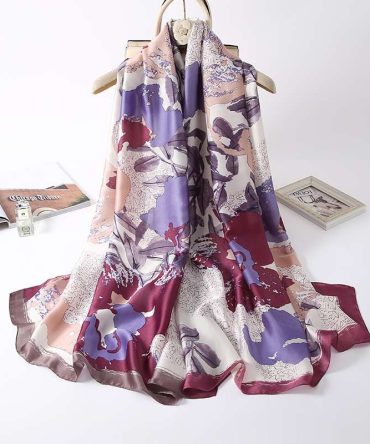
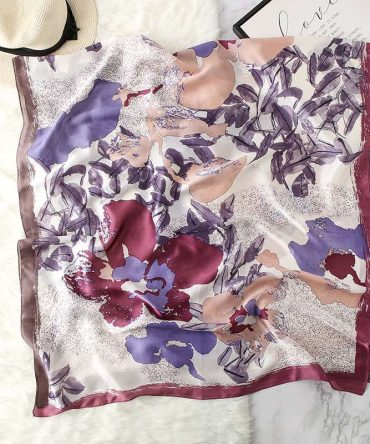
Burgundy, the quiet alternative to black
Black does the job. It always has. But there's a reason stylists keep reaching past it for burgundy, especially once the weather cools and the light in Dubai and Abu Dhabi turns a little softer in the evenings. A burgundy scarf carries the same weight and versatility as black, the same ease against gold jewellery or a structured coat, but it reads warmer and more considered. It says you thought about the outfit rather than defaulted to it. That's the whole case for this colour family: it does the quiet work of black while adding a note of colour that photographs beautifully and never competes with the rest of what you're wearing.
This is also a colour that ages well across a wardrobe. A burgundy hijab bought this year won't look dated in three. It sits outside trend cycles in a way that brighter jewel tones or seasonal pastels don't, which makes it one of the more sensible investments in the Layl range if you're building a rotation rather than shopping for a single event.
Burgundy versus maroon, and why we keep them apart
We split these into two separate categories on purpose, and it's worth explaining why, because the words get used interchangeably everywhere else. Maroon leans brown. It has warmth and a certain earthiness to it, closer to dried leaves or aged leather, and it flatters warm undertones and gold hardware in a very specific way. Burgundy leans the other direction. It has more purple in it, more cool red, closer to the colour of actual wine or a ripe plum than to rust or terracotta. Held side by side, the difference is obvious. Mixed into one category, it isn't, and you end up scrolling past pieces that aren't what you pictured.
So on Layl, if you searched for a plum burgundy hijab and landed here, this is the right place. If what you actually want is something browner and more autumnal, our maroon edit is the one to check instead. Keeping the two separate means the swatch you see on screen is closer to what arrives at your door, which matters more with colour than with almost any other attribute in a scarf.
How to tell them apart when you're not sure
Hold the fabric near something you know is true burgundy, like red wine in a glass, or true maroon, like a conker or a chestnut shell. Burgundy pulls toward violet at the edges, especially in silk where the sheen catches cooler light. Maroon stays flat and brown even in bright light. If a scarf looks different depending on whether you're looking at it under daylight or under warm indoor bulbs, that's often a sign it's sitting closer to the burgundy end, since the purple undertone is more sensitive to colour temperature than a straight brown.
From light wine to deep plum-burgundy
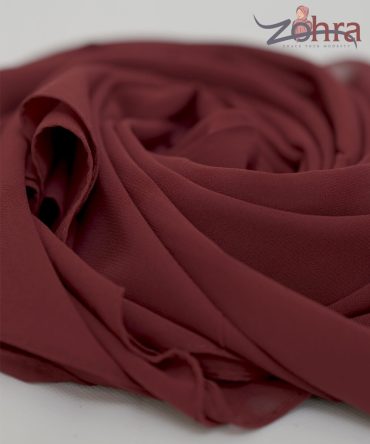
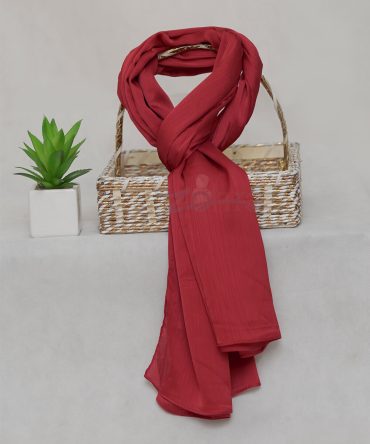
Not every piece in this category sits at the same depth, and that range is deliberate. At the lighter end you'll find wine scarf tones that are still recognisably burgundy but with more red visible, useful if you want the colour without it reading heavy or occasion-only. These lighter wine shades work well as an everyday hijab because they don't demand the same styling effort as the deeper tones.
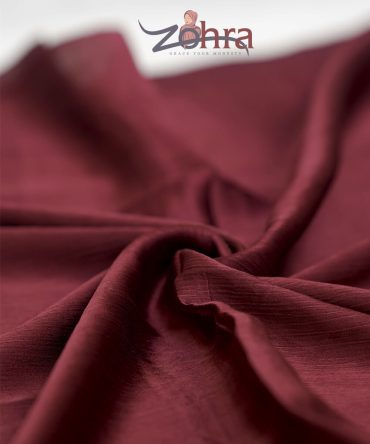
Move down the range and you reach the deep plum-burgundy pieces, almost aubergine in low light, which is where a lot of our evening and formal pieces live. These darker tones are the ones that do the most visual work with minimal styling. A deep plum-burgundy silk scarf against a plain black or cream outfit needs nothing else added to look finished. If you're only buying one piece from this category, it's worth deciding first whether you want something you'll wear most days, which points toward the lighter wine end, or something reserved for evenings and occasions, which points toward the deep plum shades.
Styling burgundy against neutrals
Burgundy was built for neutrals. Against cream, ivory, or oatmeal, it softens and looks almost dusty, which is a flattering effect for daytime wear and for anyone who finds pure black too stark against lighter clothing. Against true black, it does the opposite: it sharpens and looks richer, more saturated, which is why so many evening outfits pair a black abaya or dress with a burgundy scarf rather than matching tone for tone.
Grey is the other neutral worth mentioning, and it's underrated here. A charcoal or dove grey outfit with a burgundy hijab reads modern and slightly editorial, more so than the black or cream pairings, because grey doesn't push the burgundy toward either warmth or coolness. It just lets the colour sit as itself. If you want a single outfit formula to remember from this section, it's this one: neutrals recede, burgundy leads.
Styling burgundy against silver and gold
Gold jewellery against burgundy is the classic pairing and it works because burgundy has enough warmth in its undertone to meet gold halfway, even though the colour itself is cool. Think antique gold hoops, a fine gold chain, or gold-rimmed sunglasses. It's a combination that looks intentional without looking matched.
Silver is the less obvious choice but arguably more interesting with the cooler, plum-leaning shades in this range. Silver jewellery against a deep plum-burgundy silk scarf picks up on the purple undertone rather than the red, and the result feels cooler and more contemporary than the gold pairing. If you already lean toward silver in your everyday jewellery, don't feel you need to switch to gold just because burgundy is traditionally styled that way. The cooler end of this colour family was practically made for it.
Fabric notes: silk, chiffon, and velvet-look
Fabric changes how burgundy behaves almost as much as the shade itself does. A burgundy silk scarf has natural sheen, and that sheen catches light in a way that makes the colour shift subtly as you move, sometimes reading closer to plum, sometimes closer to true wine. It drapes with weight and holds a wrap shape well, which is why it's the fabric we'd point to for evenings, weddings, or anything photographed.
Chiffon in burgundy is lighter and more matte by comparison. It doesn't have the same light-catching quality as silk, but it moves more easily and layers better in warmer weather, which matters even in the cooler UAE months when air conditioning indoors can make heavier fabrics impractical. If you want burgundy as a daily hijab rather than an occasion piece, chiffon is usually the more comfortable choice.
Velvet-look pieces sit at the deep end of the range almost exclusively, because the texture itself absorbs light rather than reflecting it, which pushes the colour toward its darkest, most plum-heavy expression. These read as distinctly cold-weather pieces. They're not for daily rotation in a UAE climate, but for winter evenings, they carry a richness that neither silk nor chiffon quite matches.
When to wear it: autumn, winter, and evenings
Burgundy has a seasonal association with autumn and winter that isn't just marketing. The colour genuinely suits shorter days and cooler light, the same way pastels suit spring. In the UAE that translates less to temperature and more to the calendar: burgundy starts appearing more in outfits from October through February, alongside the events that cluster in that window, weddings, National Day, winter evenings out.
It also happens to be one of the more forgiving evening colours under artificial light. Where very bright jewel tones can look flat under warm restaurant lighting or event lighting, burgundy tends to deepen and look more expensive the dimmer the room gets. That's part of why it turns up so often in evening and formal styling specifically, not just in everyday scarves.
Shopping burgundy on Layl
Every piece in this category is priced in AED and ships across Dubai, Abu Dhabi, Sharjah, and the rest of the UAE, usually within one to three business days. Orders over AED 200 ship free. You can pay on delivery, through Apple Pay, or split the cost with Tabby or Tamara if you'd rather spread payments across a few weeks, which is worth considering if you're buying more than one piece, say a silk scarf for evenings and a chiffon one for everyday.
Is burgundy the same as maroon?
No, and we treat them as separate categories for exactly that reason. Burgundy has a cooler, more purple-red cast, closer to wine or plum. Maroon is warmer and browner. If you're after the deep wine-purple end, you're in the right category. For a browner, earthier tone, check our maroon collection instead.
What fabric should I choose for a burgundy hijab I'll wear daily?
Chiffon is the more practical everyday choice. It's lighter, easier to wrap and re-wrap through the day, and it sits toward the lighter wine end of the colour range rather than the deepest plum shades, which suits daytime wear better than an occasion-heavy fabric like silk or velvet-look.
Does burgundy suit every skin tone?
It suits most skin tones better than people expect, largely because the range itself spans warm-leaning wine tones and cooler plum tones. If you're not sure which end works for you, hold both a lighter wine shade and a deeper plum-burgundy piece near your face in daylight. One will noticeably brighten your complexion more than the other, and that's the one to buy first.
Can I return a burgundy scarf if the colour looks different in person?
Screens render colour differently, and burgundy in particular can shift depending on your display, so we'd always encourage checking product photos in different lighting where available. If the piece still isn't right once it arrives, our standard return policy applies, and our team can help you find the right shade within the range rather than defaulting to a refund.