












Why black outsells every other colour in this store
Look at the order data on any given month and black wins, by a wide margin. Not because it is the safe choice, though it is that too, but because it is the only colour that moves seamlessly between an office desk, a wedding in Ras Al Khaimah, and a Thursday grocery run without ever looking like it is trying. A black scarf does not compete with your outfit. It absorbs whatever is happening around it and lets the rest of the look, your bag, your abaya, your jewellery, do the talking. That is the whole appeal, and it is why this category tends to be the first stop for women building out a hijab or scarf wardrobe from scratch.
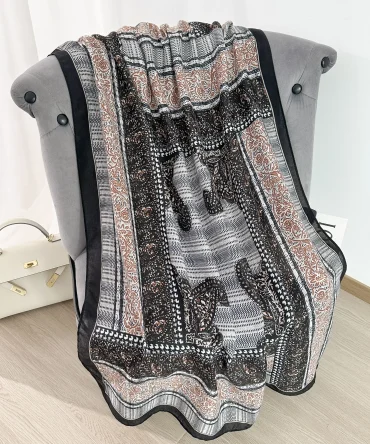
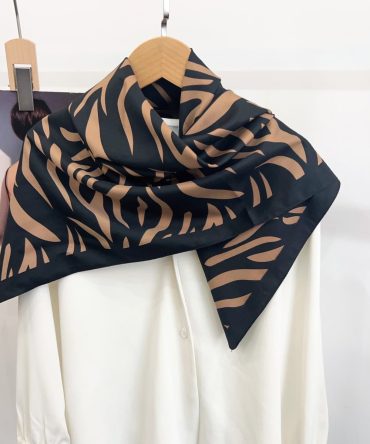
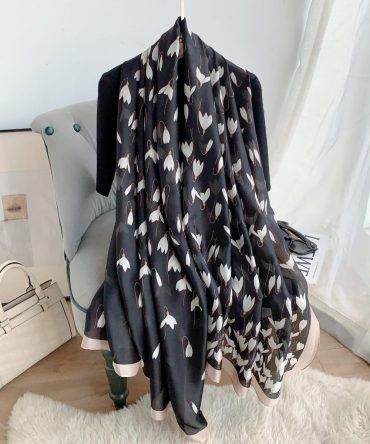
What surprises first-time buyers is how differently black behaves depending on what it is made of. A black scarf is not one product, it is a category of finishes, and the fabric changes the mood entirely. This page pulls together our black pieces across silk, chiffon, pashmina, and cotton so you can compare them side by side rather than guessing from a single product photo.
How black changes across fabric
Matte cotton black is the flattest, most forgiving version. It reads as almost charcoal in daylight and does not catch light, which makes it the easiest to wear for structured, tailored looks, think blazers, abayas with clean lines, anything where you want the hijab to disappear into the outfit rather than announce itself. It is also the most breathable of the four, which matters more than people expect once the UAE heat sets in properly.
Chiffon black sits in the middle. It has just enough sheen to catch light at the edges without looking dressy, and the drape is soft enough that it falls close to the face rather than sitting stiff. This is usually the one customers reach for when they want a black hijab that works for both a work day and dinner afterward, no change of scarf required.
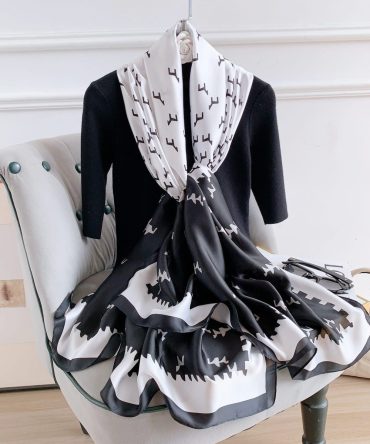
Silk black is a different animal entirely. Under any kind of light, indoor or sun, it shifts from black to a deep charcoal-blue or almost bottle-green depending on the weave, which is what gives a black silk scarf its dimension instead of looking like a flat block of colour. It photographs beautifully, which is part of why it is the pick for occasion wear, but it also creases if knotted too tightly, so it rewards a slightly looser styling hand.
Pashmina black is the heaviest and the warmest in tone, closer to true ink than the others. A black pashmina scarf holds its shape when wrapped, which makes it the one that looks intentional rather than accidental even with minimal styling effort. It is the winter and evening pick, too warm for a Dubai afternoon in July but exactly right for an air-conditioned mall, a flight, or the handful of genuinely cool evenings Sharjah gets between December and February.
Matte cotton
Best for everyday wear, office settings, and anyone who wants a scarf that behaves the same way every single time it is worn. Low maintenance, high rotation.
Chiffon
Best for the woman who does not want two wardrobes, one for day and one for evening. Light enough for heat, polished enough for photos.
Silk
Best for occasions where the scarf itself is part of the outfit, not just a covering. Weddings, Eid visits, anything with good lighting.
Pashmina
Best for cooler months, travel, and layering under an abaya when warmth matters as much as the finish.
Styling black with abayas, and styling it with colour
Paired with a black abaya, a black scarf in a different fabric to the abaya itself, say a silk hijab over a crepe abaya, creates tonal depth without needing a second colour anywhere in the look. This is the monochrome approach, and it is the one that reads most polished in photos because there is nothing competing for attention. The trick is contrast in texture rather than shade, matte against sheen, so the outfit does not flatten into a single block.
Against colour, black works as the neutral that lets everything else be loud. A camel or beige abaya with a black hijab looks considered rather than default. A jewel-tone outfit, emerald, burgundy, deep blue, gets grounded rather than overwhelmed by a black scarf, because black does not fight for attention the way another bright colour would. The one place black struggles is against other near-blacks or very dark navy, where the two can read as a styling mistake rather than a deliberate pairing under certain lighting. If your abaya is a very dark charcoal or midnight, a black chiffon or silk hijab still works because the sheen creates enough separation, but a matte cotton black can flatten into it.
When black is not actually the right call
Worth saying plainly, black is not always the best option even though it is the most bought. In peak summer, from June through September, black absorbs heat more noticeably than lighter shades, and on very sunny outdoor days a stone, sand, or soft grey scarf will feel cooler against the skin. For daytime outdoor events, garden weddings, beach clubs, a lighter shade often photographs better too, since black can lose detail and texture in strong overhead sun. Black earns its place indoors, in the evening, and across most of the cooler months, which in the UAE is a longer stretch of the year than people assume, roughly October through April.
Caring for black fabric specifically
Black shows two things that lighter colours hide easily, lint and fading, and each fabric handles them differently. Cotton picks up lint fastest, especially if stored folded against other dark garments, so a quick lint roll before wearing is worth the ten seconds. Silk fades from repeated sun exposure faster than the other three fabrics here, since dye on silk sits closer to the surface, so hanging a black silk scarf away from direct window light when not in use keeps the depth of colour intact for longer. Chiffon is fairly forgiving on both counts but wrinkles visibly on black in a way it does not on lighter shades, so a light steam rather than a hot iron keeps it looking new. Pashmina holds colour the longest of the four but is the most prone to pilling with friction, so avoid rubbing it against rough bag straps or coat wool.
Washing black separately, always, is the one rule that matters more for this colour than any other. Even a small amount of detergent residue or hard water buildup shows on black as a dull grey cast that is difficult to reverse. Cold water, mild detergent, and air drying out of direct sun will keep any of these fabrics looking closer to new for years rather than months.
A short buying guide by fabric
If this is your first black scarf, start with chiffon. It covers the widest range of occasions and forgives styling mistakes better than silk or pashmina. If you already own a chiffon black and are filling a gap, cotton is the practical add for daily wear and gym or school runs where you want something you are not precious about. Silk is worth the investment once you have the basics covered and want one piece that performs for photos and events. Pashmina is the last one to add, seasonal by nature, but genuinely useful for anyone who travels often or spends real time in air conditioning.
Pricing across the category runs from budget-friendly cotton pieces up to the higher end of silk and pashmina, all in AED, and everything ships across Dubai, Abu Dhabi, Sharjah, and the rest of the UAE within one to three business days. Orders over AED 200 ship free. Cash on delivery is available for anyone who prefers to pay at the door, and Apple Pay, Tabby, and Tamara are all set up at checkout for anyone who wants to split the cost across a few months instead of paying it all upfront.
Frequently asked questions
What is the most versatile black scarf fabric for everyday wear in the UAE?
Chiffon, for most people. It breathes better than silk in heat, drapes better than cotton for a polished finish, and moves easily between casual and slightly dressed-up settings without needing to be swapped out.
Does a black hijab look too plain on its own?
Not if the fabric has some texture or sheen to it. A flat matte cotton in black can look plain against a plain outfit, but chiffon and silk both catch light in a way that adds visual interest without needing a print or embellishment.
Is a black pashmina scarf too warm for daily use in Dubai or Abu Dhabi?
For most of the year, yes, it is heavier than needed outdoors. It comes into its own indoors under air conditioning, on flights, and during the cooler months from around November to February.
How do I stop my black silk scarf from fading?
Keep it out of direct sunlight when stored or hung, wash it separately in cold water, and avoid wringing it. Silk dye sits close to the surface, so sun and friction are the two things that dull it fastest.