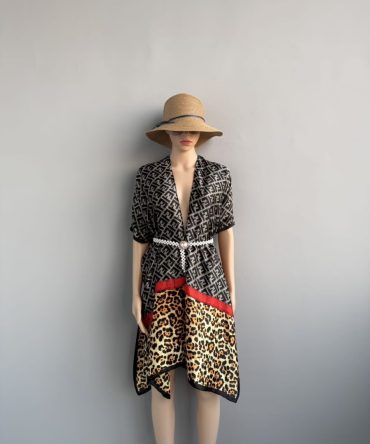
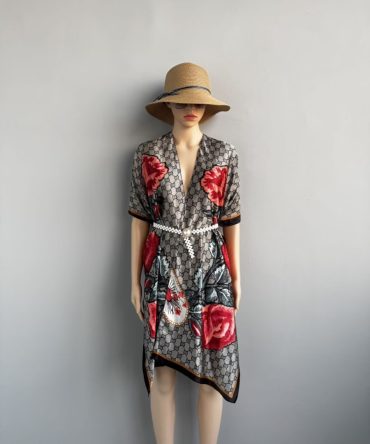
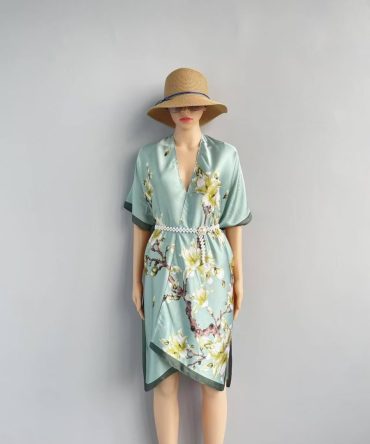


What Makes a Pashmina Different From an Ordinary Scarf
The word pashmina comes from the Persian "pashm," meaning wool, and it originally referred to the fine undercoat fibre combed from Changthangi goats living in the high altitudes of Ladakh. That fibre is finer than standard cashmere, which is why a real pashmina scarf feels weightless against the neck yet still holds warmth. Over time the term has broadened in the retail world to describe a family of soft, generously sized wraps, some pure cashmere, some cashmere-silk blends, some modern viscose or modal versions that mimic the drape at a more accessible price. At Layl, our pashmina shawl edit leans into that broader, wearable definition: fabrics chosen for softness and fall rather than strict fibre pedigree, because what most women actually want is something that wraps beautifully and survives daily wear.
Size is the other giveaway. A regular scarf usually sits somewhere between 30 and 70 inches long and 10 to 25 inches wide, fine for a neck knot but not much else. A pashmina shawl runs longer and wider, often 40 inches by 80 inches or more, with enough surface area to cover the shoulders, wrap the torso, or double as a lightweight cape. That extra fabric is the whole point. It changes what the piece can do, from a quick throw-on layer to a proper evening wrap.
Why a Pashmina Earns Its Place in a UAE Wardrobe
Anyone who has walked from a 45-degree car park into a mall food court knows the UAE's real climate problem isn't heat, it's air conditioning. Offices, malls, cinemas and restaurants across Dubai and Abu Dhabi run cold enough that a light layer stops being optional. A pashmina scarf folded into a bag or draped over the shoulders solves this without the bulk of a jacket, and it comes off just as easily the moment you step back into the sun.
There's a second, very local use case: layering with an abaya. A shawl for abaya wear needs to add warmth or polish without fighting the silhouette underneath, and pashmina does this better than stiffer fabrics because it moves with the body instead of against it. Desert evenings also drop in temperature faster than people expect, so a pashmina thrown over an outfit at a beach dinner in Ras Al Khaimah or a rooftop gathering in Sharjah earns its keep well past sunset. It's a piece that works indoors against the AC and outdoors once the desert air cools, which is a rare kind of versatility for one garment.
A Practical Case for Travel
Frequent flyers in the region already know this trick: a pashmina scarf uae shoppers pack for flights doubles as a blanket, a headrest, or a modesty layer at a destination with different dress norms. It compresses to almost nothing in hand luggage yet unfolds into something substantial enough to keep you warm on a chilly cabin at 35,000 feet.
Styling a Pashmina: More Than One Way to Wear It
The simplest styling is also the most forgiving. Drape the shawl evenly across both shoulders, let the ends hang loose in front, and you have an instant finish to a plain abaya or a simple dress. For something with more shape, try the cape shawl approach: fold the fabric into a triangle, drape it point-down at the back, and bring the two front corners together with a brooch or a loose knot at the chest. This reads more structured and works well over evening wear, which is exactly why an evening shawl uae hostesses reach for tends to be a solid, fluid pashmina rather than a printed one; prints compete with jewellery and embellishment, solids don't.
For daytime, a loose single loop around the neck, almost like an oversized infinity scarf, keeps things casual without looking like you're trying too hard to dress up a jumper and jeans. If you're wearing it over an abaya, tuck one end under the opposite arm and let the rest fall long down one side. This keeps the wrap secure when you're walking or getting in and out of a car, and avoids the constant re-draping that looser styles demand. On particularly cold office days, some women simply wear it as a stole, folded lengthwise and settled over the forearms rather than the shoulders. It's less about following a single correct method and more about matching the drape to what the fabric wants to do.
Reading Our Colour Range
Layl's pashmina edit is built mostly around solid neutrals rather than prints, and there's a reason for that beyond aesthetics. A solid wrap pairs with more of an existing wardrobe, ages better than a seasonal print, and photographs more consistently across the warm-toned lighting common in Gulf interiors. Camel, taupe and warm beige sit well against darker abayas and add contrast without shouting. Charcoal and deep black work as a near-invisible layer over black abayas, useful when the goal is warmth rather than a style statement. Off-white and soft ivory brighten the face and are the easiest to dress up for evening. A handful of deeper jewel tones, bottle green or burgundy, give the range some richness for occasion wear without straying into the kind of print that dates quickly. If you're only going to own two, a neutral beige and a black cover almost every situation this climate throws at you.
How to Judge Whether a Pashmina Is Actually Good
Weight is the first tell. Pick it up and let it fall from your hand. A well-made pashmina shawl has enough substance to hang with a slight pull toward the floor, not so heavy that it feels like a blanket, but never so thin that it floats and clings to itself with static. Cheap synthetic versions often feel slippery and thin because they're cut for volume rather than hand-feel.
Drape matters just as much as weight. Hold one end and let the rest hang; a good pashmina will fall in soft, rounded folds rather than stiff angular creases. If it wants to hold a crease like paper, the weave is too tight or the fibre too processed. Run your fingers across the surface too. You should feel a faint texture from the weave rather than a flat, almost plastic smoothness, which is usually a sign of a heavily synthetic blend.
Finally, check the edges. Fringe should be even, not fraying loose after a light tug, and finished by hand-knotting or a neat machine rolled hem rather than a raw cut edge that unravels within a few washes. Pull gently on a few threads at the fringe; a properly finished piece will hold, while a poorly finished one starts to shed almost immediately.
Caring for Your Pashmina
Most pieces in this category do best hand washed in cold water with a mild, pH-neutral detergent, then laid flat to dry away from direct sun, which can fade darker neutrals unevenly. Skip the wringing; press excess water out gently with a towel instead. If a light iron is needed, keep it on a low setting and iron through a cotton cloth rather than directly on the fabric, especially for cashmere-blend pieces where direct heat can flatten the fibre's natural loft. Store folded rather than hung, ideally in a breathable cotton bag, since hanging can stretch the weave out of shape over months of use. A light steam between wears is usually enough to freshen it up without a full wash.
Delivery and Payment Across the UAE
Every pashmina scarf on Layl ships in AED, with delivery to Dubai, Abu Dhabi, Sharjah and the rest of the UAE typically arriving within one to three business days. Orders over AED 200 qualify for free shipping, and if you'd rather pay on delivery, cash on delivery is available alongside Apple Pay for a faster checkout. For higher-value pieces, Tabby and Tamara let you split the cost into instalments at checkout, which makes it easier to build out a small wardrobe of neutrals rather than buying just one and rationing it across the season.
Frequently Asked Questions
What is the difference between a pashmina and a shawl?
Shawl is the general term for any large wrap used to cover the shoulders, regardless of fabric. Pashmina refers more specifically to a fine, soft wool or wool-blend wrap, historically cashmere from Ladakh, now used more broadly for a category of soft, densely woven wraps. In practice, every pashmina is a type of shawl, but not every shawl is a pashmina; a cotton or polyester wrap wouldn't typically earn the name even though it serves a similar purpose.
Is pashmina good for summer air conditioning indoors?
Yes, and this is actually where it earns its keep in the UAE. A pashmina scarf is light enough not to overheat you outdoors in the brief walk between car and building, but insulating enough to cut the chill of an over-cooled office or mall interior. Cashmere-blend versions in particular trap warmth without adding bulk, which is exactly what you want when the outdoor and indoor temperatures can differ by 15 degrees or more.
How do I wear a pashmina over an abaya?
The simplest method is to drape it evenly across both shoulders with the ends hanging loose down the front, which works with almost any abaya cut. For a more secured look, especially if you're moving around a lot, tuck one end under the opposite arm and let the rest fall along one side. A cape shawl style, folded into a triangle and pinned at the chest, gives a dressier finish for evening occasions layered over a plainer abaya.
How many pashminas does someone actually need?
Two well-chosen neutrals cover most situations: one warm tone like camel or beige for daytime and layering over lighter abayas, and one deep tone like black or charcoal for evening or darker outfits. From there, a jewel tone such as burgundy or bottle green adds range for occasion wear without duplicating what the neutrals already do.