









Why green is having a moment in modest fashion
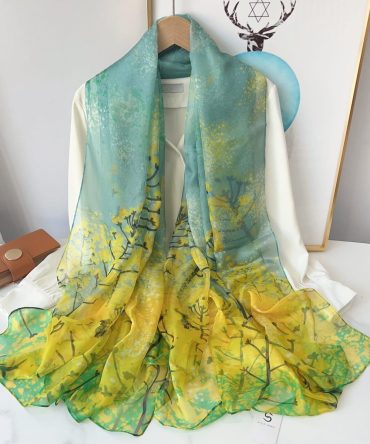
Green spent years sitting quietly behind black, beige and navy in most modest wardrobes, treated as a seasonal accent rather than a staple. That has shifted. Walk through any souq or scroll any modest fashion feed in the region right now and green keeps surfacing, not as one shade but as a whole family of them. Part of this is a broader move away from the safety of neutrals. Part of it is that green photographs beautifully against warm light, gold jewellery and the sandstone tones that define so much of the UAE's architecture. A green hijab reads as considered rather than loud, which fits a wardrobe built around quiet luxe rather than statement dressing.
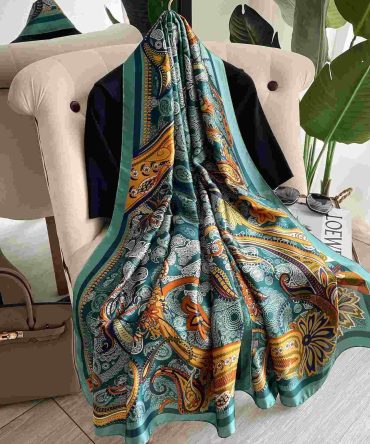
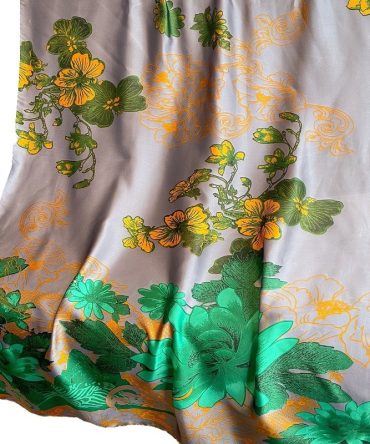
At Layl, this category pulls together everything from the palest sage to a near-black forest green, spanning silk, chiffon and cotton. If you are after olive specifically, that sits in its own dedicated category since it behaves so differently on the skin and in styling. What you will find here is the wider spectrum: the greens that feel fresh, the ones that feel grounded, and the ones that feel formal enough for evening.
Reading the range: sage, mint, emerald, forest
Not all greens do the same job, and lumping them together is where a lot of styling advice falls short. Each shade in this range has its own personality.
Sage green
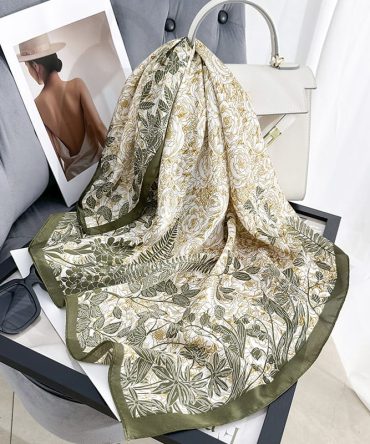
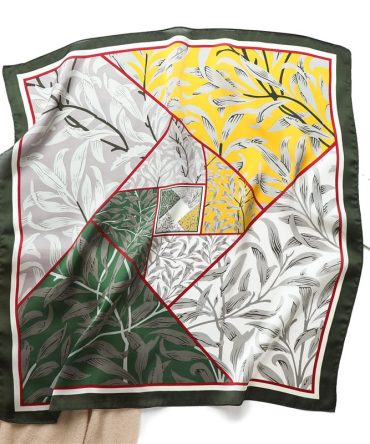
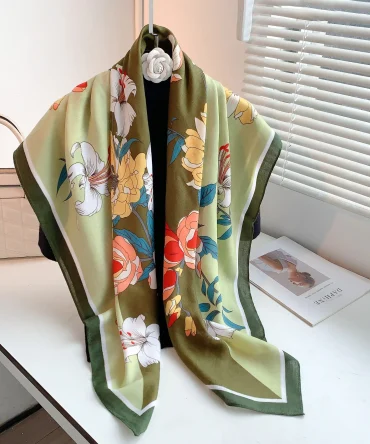
Sage is the green for people who think they don't like green. It has enough grey in it to behave like a neutral, which is why a sage green hijab pairs so easily with beige, camel, dusty pink and off-white without ever competing for attention. It's soft, slightly muted, and works well as an everyday piece rather than an occasion one. If you're testing whether green suits you at all, start here.
Mint
Mint is brighter and cooler than sage, with a freshness that leans into spring and summer wardrobes. It sits close to the skin nicely in lightweight chiffon, and it's a good pick for daytime events, brunches or anything outdoors where you want colour without heaviness. It can read a touch cold on very fair or very deep skin tones if the fabric is thin and unlined, so a slightly heavier chiffon or a cotton blend often flatters more than a sheer one.
Emerald
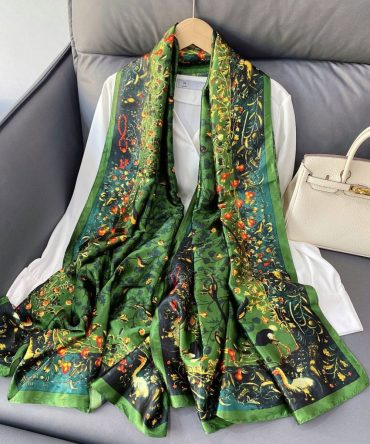
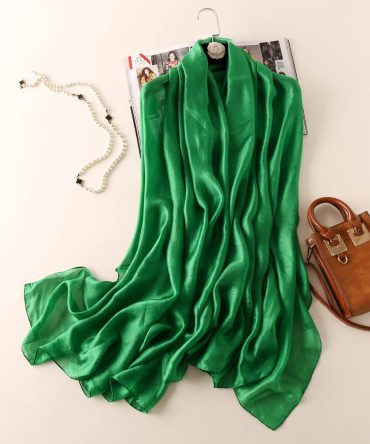
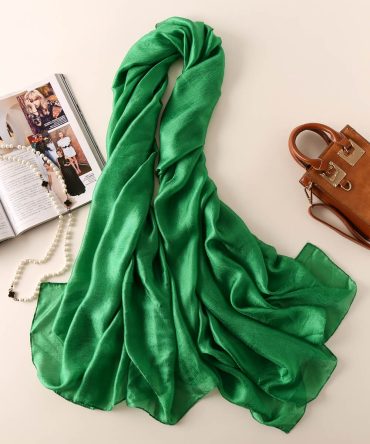
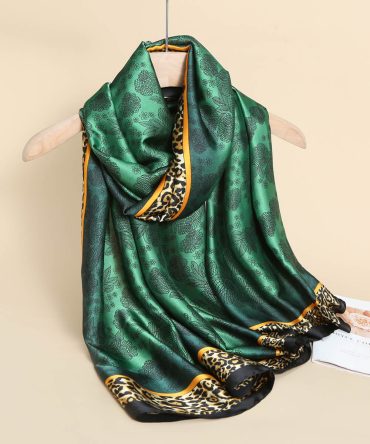
This is the shade most people picture when they hear "green scarf." An emerald scarf is saturated, jewel-toned and unapologetic, closer to the green of Cartier boxes than anything you'd find on a lawn. It's the one to reach for with evening wear, wedding season or any outfit that needs one clear focal point. Emerald in silk in particular has a depth that chiffon can't quite match, since silk holds colour with more richness and less transparency.
Forest
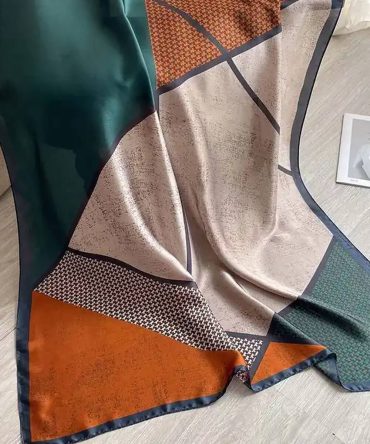
Deep, almost blackened green, forest is the most versatile dark shade after black itself. It works for winter (relative as that is in the UAE), for office wear, and for anyone who wants colour without brightness. A forest green hijab can often double for occasions where you'd otherwise default to black or navy, giving the outfit a bit more character while staying restrained.
Matching green to your skin tone
Green has a reputation for being tricky against skin, more than most other colours in a modest wardrobe, and there's some truth to it. The fix isn't to avoid green, it's to pick the right green.
Warmer, olive or golden undertones generally do well with emerald and forest, since these deeper shades have enough warmth in their base to sit comfortably near the face rather than washing it out. Cooler or pinker undertones tend to look better in sage and mint, which carry more grey and blue and complement rather than clash with pink undertones in the skin. If you're fair-skinned, a mint or sage worn close to the face can be more flattering than an intense emerald, which can occasionally overpower lighter colouring when worn as a hijab rather than a loosely draped scarf. If you have deeper skin, almost every green in this range will read beautifully, but emerald and forest in particular tend to look especially rich.
None of this is a hard rule. Fabric weight, how close the scarf sits to the face, and even the lighting you're usually photographed in all play a part. The more reliable test is simply holding a scarf up under natural daylight, not the fitting room, and seeing whether your face looks brighter or greyer.
Styling green: against neutrals and against gold
Green's biggest advantage over more attention-seeking colours is how easily it sits against neutrals. A sage green hijab against cream, stone or taupe reads as effortless, almost like the two colours were designed for each other. Forest green does something similar against camel and dark denim, adding depth without introducing a second competing colour into the outfit.
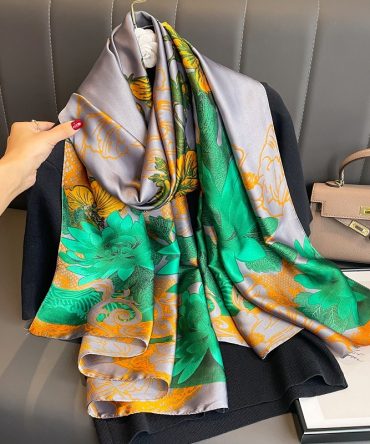
Gold jewellery is where green earns its reputation as a quietly luxurious colour. Emerald and forest both have enough warmth to sit beautifully next to gold, whether that's a fine gold chain, statement earrings, or the gold thread sometimes woven into an abaya hem. Silver, by contrast, tends to suit the cooler greens, mint and sage, better than the warm dark ones. If you're building an outfit around a piece of gold jewellery you already own and love, an emerald scarf dubai shoppers keep coming back for is usually the safer bet than a lighter green.
For those who want to wear green without making it the obvious focal point of the outfit, keep the rest of the look monochrome or neutral and let the scarf carry all the colour. Green paired with more green, in a slightly different shade, also works better than most people expect, especially across sage and forest.
Fabric notes: silk, chiffon and cotton
The fabric matters as much as the shade when it comes to how a green actually reads once it's on.
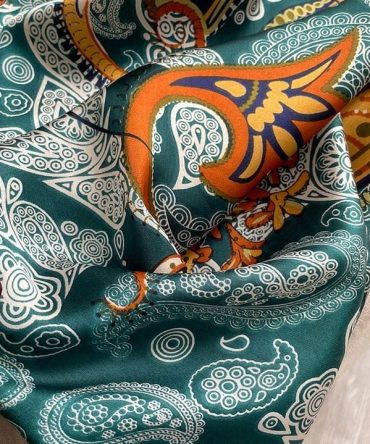
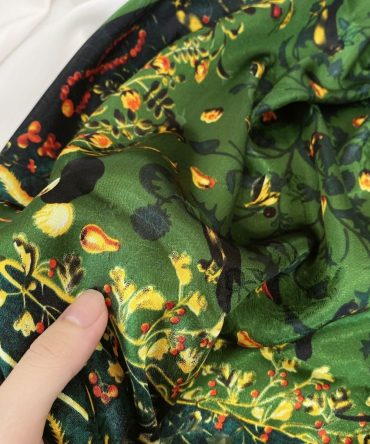
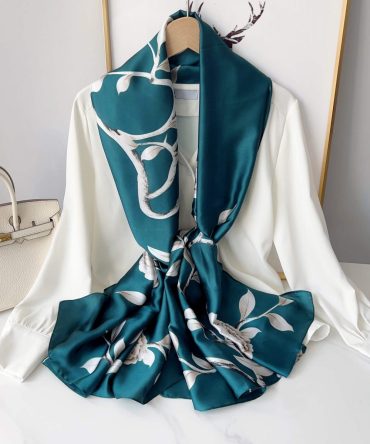
Silk carries colour with the most depth and the least transparency, which is why a green silk scarf in emerald or forest looks noticeably richer than the same shade in a thinner fabric. Silk also has a natural sheen that catches light, making it a strong choice for evenings, weddings or anywhere you want the scarf itself to feel like part of the styling rather than just a backdrop. It drapes with weight, so it holds pleats and folds well, but it needs a slightly more careful hand when wrapping since it can be slippery.
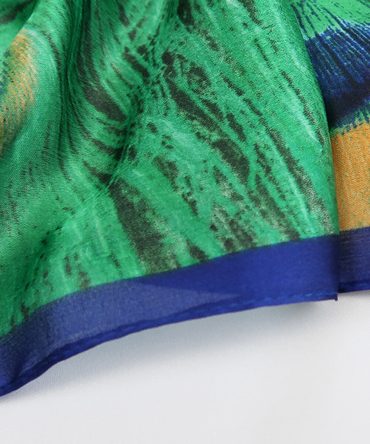
Chiffon is lighter and more breathable, better suited to daily wear in the UAE's climate. It's more forgiving to wrap, holds pins and underscarves securely, and tends to be the fabric of choice for mint and sage since the lighter weight suits lighter, fresher shades. It doesn't have silk's depth of colour, so if you want an intense emerald, expect it to read slightly softer in chiffon than it would in silk.
Cotton sits between the two in terms of formality but ahead of both in comfort for long days. It's matte rather than lustrous, breathes well, and tends to suit the more muted greens, sage and forest, better than the brighter ones. For anyone who wears a hijab all day, every day, cotton in a soft sage is often the most practical starting point in this entire range.
Occasions: when to reach for which green
Everyday and office wear leans toward sage and forest in chiffon or cotton, colours calm enough not to compete with a workday but still more interesting than black or grey. Casual weekends and daytime outings suit mint, especially in the warmer months, when a lighter chiffon feels less heavy against the skin. Evening events, weddings and anything with gold jewellery call for emerald, ideally in silk, where the colour has room to actually show its depth under evening light. Forest green works almost everywhere in between, which is part of why it tends to be a repeat purchase once someone tries it.
Shopping this range on Layl
Every piece in this category is priced in AED, with free delivery across the UAE on orders over AED 200 and 1 to 3 business day delivery to Dubai, Abu Dhabi, Sharjah and beyond. Cash on delivery is available if you'd rather see the colour in person before paying, and both Tabby and Tamara let you split the cost into instalments if you're building out a few shades at once, which is a common way to buy into a new colour family without committing to a single piece. Apple Pay is supported for anyone who prefers a faster checkout.
Is green a good colour for a hijab if I usually wear neutrals?
Yes, and sage is usually the easiest entry point. It behaves like a neutral in how it pairs with beige, cream and camel, so it won't feel like a dramatic departure from what you already wear. Once you're comfortable with sage, forest and eventually emerald tend to follow naturally.
What's the difference between olive and the greens in this category?
Olive has a strong yellow-brown undertone that puts it closer to khaki than to true green, and it tends to suit a slightly different set of skin tones and outfits. Because of that, Layl keeps olive as its own separate category rather than mixing it in here. This page focuses on sage, mint, emerald and forest, the shades that read as true green rather than green-brown.
Which fabric should I choose for daily wear in UAE weather?
Chiffon or cotton, generally. Both breathe better than silk across long, warm days, and cotton in particular holds up well if you're wearing a hijab from early morning through evening. Save silk for events where you're not wearing it for eight or more hours straight.
Can I return or exchange if the shade doesn't match my skin tone as expected?
Colour can look different under different lighting, so it's worth checking Layl's returns policy on the checkout page for the current exchange window. Because payment options include cash on delivery, many customers choose to inspect the colour in daylight before finalising payment, which helps avoid this issue altogether.