












White Isn't One Colour, It's a Range
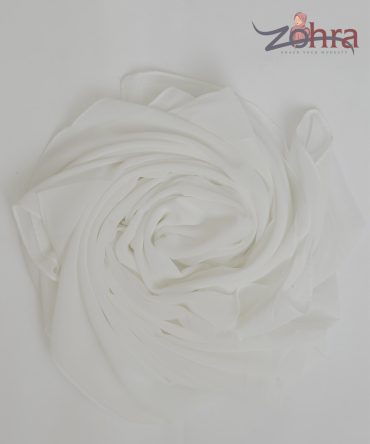
Ask five people to picture a white scarf and you'll get five different shades in their heads. There's the stark, bridal white that reads almost blue in daylight. There's ivory, which leans warm and sits closer to bone. There's cream, softer again, with a faint yellow undertone that photographs beautifully but can look dull under harsh fluorescent light. And there's off-white, the catch-all for anything that isn't quite white but isn't beige either. This category brings all four together because, in practice, most people shopping for a "white scarf" are actually open to any of them. The trick is knowing which one you're actually looking at before you buy, since product photos taken under studio light can flatten the difference between ivory and true white almost completely.
If you've ever bought a white hijab online and been surprised when it arrived looking distinctly yellow-toned, this is why. Fabric composition, dye batch and even the whiteness of the thread used in stitching all shift the final result. A silk scarf, for instance, almost never comes out pure white because raw silk itself has a slight golden cast before it's heavily bleached, and heavy bleaching tends to weaken the fibre. So a lot of what's sold as "white silk" is really a very pale ivory, and that's not a flaw, it's just how the fabric behaves.
Matching the Shade to Your Skin Tone
This is the part most guides skip, and it matters more than fabric choice. Stark white against fair, cool-toned skin can look sharp and clean, but on warmer or deeper skin tones it sometimes creates a harsh contrast that drains the face rather than framing it. Ivory and cream, by contrast, sit closer to most skin's natural undertone and tend to be more forgiving near the face, which is exactly why so many hijab wearers gravitate toward ivory for everyday wear rather than pure white. If you have a warm undertone, meaning gold or peachy rather than pink, cream and soft ivory will likely flatter you more than a clinical white. If you're cool-toned or deep-toned with blue undertones, a crisp white can actually brighten the complexion beautifully instead of washing it out. Test this the simple way: hold a white top or scarf under your jaw in natural daylight, not indoor lighting, and see whether your skin looks brighter or greyer.
How White Changes Across Fabric
The same shade of white looks entirely different depending on what it's woven into, and this is worth understanding before you filter by fabric as well as colour.
Crisp Cotton and Cotton-Blend
Cotton holds white the most literally. It has a flat, matte finish with almost no light play, which makes it read as the "truest" white in a lineup. This is the fabric to choose if you want a hijab that looks the same in a photo as it does in person, no shimmer, no shift depending on the angle. It's also the most breathable option for Dubai's heat, and the easiest to keep looking genuinely white over time because it tolerates warmer washes than silk ever could.
Soft-Sheen Silk
Silk catches light and throws it back in a way no other fabric does, so a white or ivory silk scarf will look slightly different depending on whether you're standing under a chandelier, outdoor sun, or a dim restaurant light. This sheen is what makes a white silk scarf feel dressier than the same shade in cotton, even without any embellishment. It's also why ivory tends to look richer in silk than in any other fabric, the natural warmth of the fibre works with the ivory tone rather than against it. A white silk scarf is generally the pick for evening wear, weddings or anything where you want the fabric itself to do the talking.
Matte Chiffon
Chiffon sits somewhere in between. It has drape and a slight translucency that cotton doesn't, but none of silk's shine. White chiffon has a soft, almost powdery look, which makes it a favourite for warm-weather occasion wear where you still want movement in the fabric without the visual weight of shimmer. Because it's sheer, most white chiffon hijabs need a proper inner cap or underscarf, otherwise the fabric can look thin rather than intentionally light.
Jersey
Jersey is the practical end of the spectrum. It doesn't hold a crease, it doesn't slip, and white jersey tends to look slightly softer and more matte than cotton, closer to a chalky finish. It's the fabric most people reach for on a day they need the hijab to just stay put, school runs, long shifts, travel days.
Keeping White Looking Genuinely White
White is the one colour that shows its age fastest, and most of that ageing is preventable. The two real enemies are staining and yellowing, and they come from different causes.
Staining is usually foundation, tinted moisturiser or oil from hair products transferring onto the fabric right where it sits against the skin. The fix is to treat that mark the same day, not after it's set. A small amount of mild soap worked in gently, then rinsed, deals with most makeup transfer if you catch it early. Once it's been through a hot wash or sat for days, it's much harder to shift, especially on silk.
Yellowing is a slower problem and it's mostly about storage and heat, not wear. White fabric that's folded away damp, kept in direct sun for long stretches, or washed repeatedly in hot water will gradually pick up a dull, uneven tone. Cotton and jersey can handle a normal machine wash on a cool setting, but silk and chiffon do better hand washed in cool water and dried flat, away from direct sun. Never wring silk, and never leave any white fabric bunched up while still damp, that's often where uneven yellow patches start. If you're rotating a white hijab into regular use, having two or three in the wardrobe rather than one means each piece gets worn less often between washes, which genuinely slows the fading.
Styling White for Day and for Occasion
Daytime white works best when it's doing a quiet job rather than a loud one. A white or off-white hijab in cotton or jersey pairs easily with almost anything in your existing wardrobe, camel, navy, soft pastels, even black, because white doesn't compete with colour, it just sits underneath it. This is why it tends to be one of the first pieces people reach for when getting dressed quickly, it removes a decision rather than adding one.
Occasion wear is where the fabric choice starts to matter more than the shade. A white silk scarf worn as a shawl over an abaya, or styled with a simple pin at the shoulder, reads as considered rather than plain, especially once the light catches the sheen. Ivory chiffon layered loosely tends to photograph well for events held outdoors in the evening, when venue lighting is warm rather than white. For anything formal, a plain white or ivory piece often works harder than a patterned one, since it lets jewellery, embroidery on the outfit, or a statement bag stand out instead of competing with a busy print.
White in a UAE Context
White carries specific weight here beyond fashion. It's the obvious choice for Eid mornings, for wedding guest dressing when the invitation calls for something polished but not competing with the bride, and for the stretch of the year when temperatures push past 40 degrees and lighter colours simply feel cooler to wear, even if the practical temperature difference is small. Cream and ivory in particular show up constantly in wedding and engagement dressing across the Gulf, largely because they read as celebratory without tipping into bridal territory reserved for the bride herself.
There's also a simple climate logic to it. White and ivory fabrics reflect more heat than dark colours, and in a country where you might move between an air-conditioned mall and open midday sun within the same hour, a lighter cotton or jersey hijab in white genuinely feels more comfortable across that swing than something in a heavier, darker fabric.
Buying White Online, Practically
Because shade is so hard to judge from a screen, it's worth checking the fabric listed on each product before assuming what "white" will look like on arrival. Everything in this collection ships across Dubai, Abu Dhabi, Sharjah and the rest of the UAE within one to three business days, and orders over AED 200 qualify for free delivery. Cash on delivery is available if you'd rather see the shade in person before paying, and Tabby and Tamara let you split the cost into instalments if you're building out a few pieces at once, say a cotton for daily wear alongside a silk for occasions.
Does a white scarf yellow faster than other colours?
Not faster in terms of fibre damage, but yellowing is far more visible on white than on any other shade, since even a slight colour shift shows up immediately against a pale background. The underlying causes, heat, sun exposure and product buildup, affect every colour equally.
What's the actual difference between ivory and off-white?
Ivory has a consistent warm undertone, closer to bone or very pale cream. Off-white is a looser term used for anything that isn't pure white but doesn't fit neatly into ivory, cream or beige either, so it can vary more between brands and even between fabric batches from the same brand.
Which fabric is best for a white hijab in Dubai's summer?
Cotton and jersey generally perform best in heat because they breathe more than silk and don't cling the way chiffon can when you're moving between air conditioning and outdoor humidity. Silk is better saved for evening or indoor occasions.
Can I return a white scarf if the shade looks different in person?
Check the specific product page for return details, but choosing cash on delivery is a practical way to confirm the shade matches what you expected before you commit to paying for it.