











Head scarves, done properly
A head scarf is one of those pieces that quietly does more than its size suggests. Some women reach for one to protect their hair from Dubai's dust and dry air conditioning, others use it as a light head covering for modesty without the structure of a full hijab, and plenty just like the way a well-chosen scarf finishes an outfit. At Layl, our head scarf edit covers all three uses, because the fabric and the fold you choose really does depend on what you need it to do that day.
The category itself sits somewhere between practical and decorative. A cotton head scarf tied at the nape works as sun protection on a beach walk in Jumeirah. A silk square knotted loosely under the chin reads as pure styling, the kind of thing you see paired with oversized sunglasses and a blazer. And a longer rectangular scarf, wrapped and pinned, gives fuller hair coverage for those who want that without switching to a dedicated hijab style. None of these are the same garment doing the same job, which is why we've kept the range varied rather than just offering one shape in twelve colours.
Fabric guide: what to actually buy
This is where most people get it wrong, usually by buying on colour alone and regretting the texture later. Fabric decides how a scarf drapes, how it holds a knot, how hot it feels by 2pm, and how long it lasts. Here's how we think about the three main options in our range.
Silk head scarf
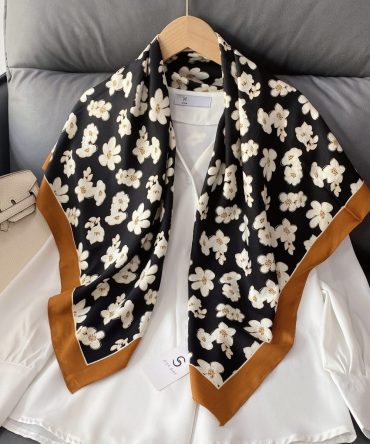
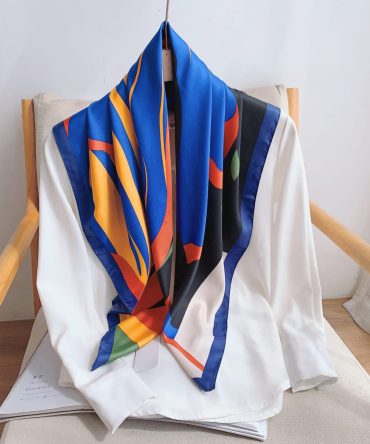
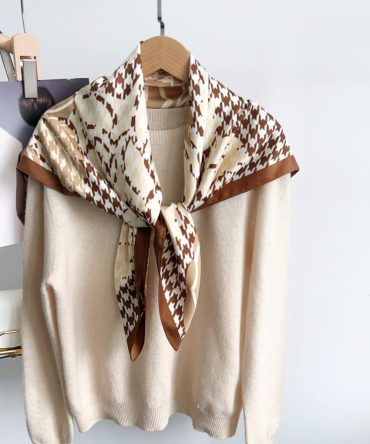
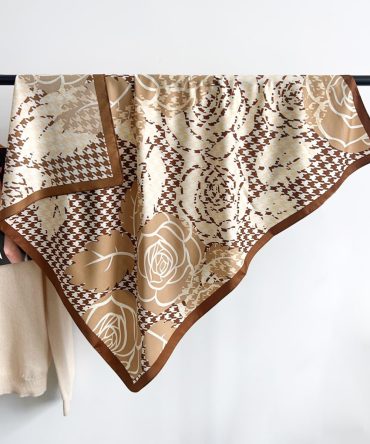
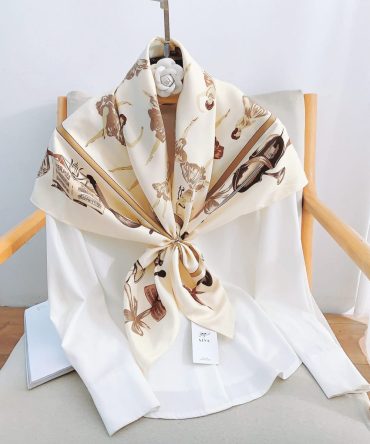
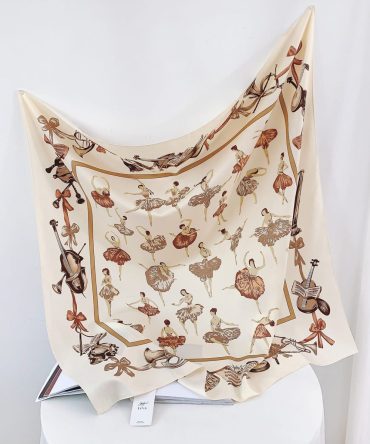
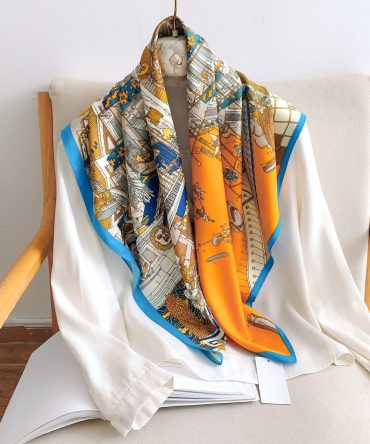
Silk is the one to choose for styling first, function second. It has a natural sheen and a fluid drape that makes even a simple knot look considered. Mulberry silk in particular takes prints well, which is why our printed silk squares tend to sell fastest, the colour sits in the fibre rather than sitting on top of it. The trade-off is grip: silk is slippery by nature, so it needs a slightly different tying technique (more on that below) and it is not the fabric to reach for if you're cycling or in high wind. It also needs gentler washing. If you want a scarf that photographs well and lifts a plain outfit without trying hard, silk is worth the extra AED.
Cotton head scarf
Cotton is the workhorse. It grips hair better than silk, breathes in humidity, and can be washed on a normal cycle without drama. For daily wear in UAE heat, especially if you're outdoors for stretches at a time, a lightweight cotton or cotton-voile scarf is genuinely more comfortable than it sounds, it doesn't cling to the scalp the way synthetic blends can. It's also the practical pick for anyone using a head scarf for sun protection rather than styling, since it absorbs sweat instead of sliding around with it. The look is more matte than silk, which some people prefer for daytime and office settings.
Printed styles
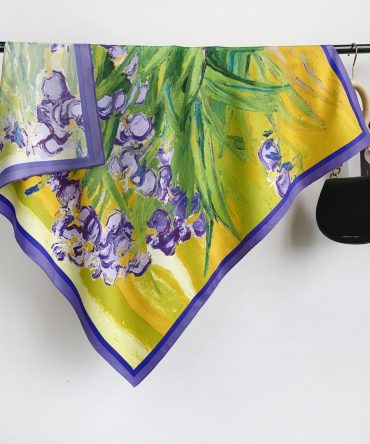
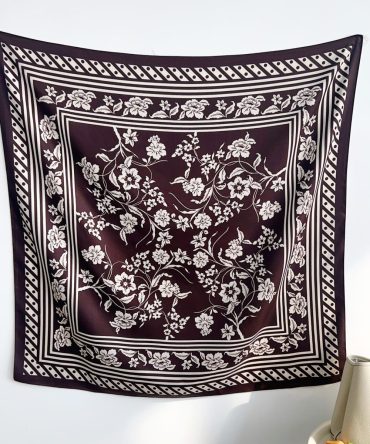
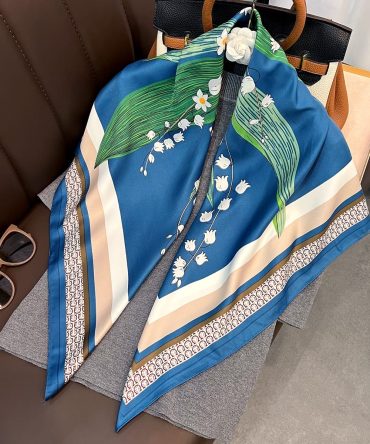
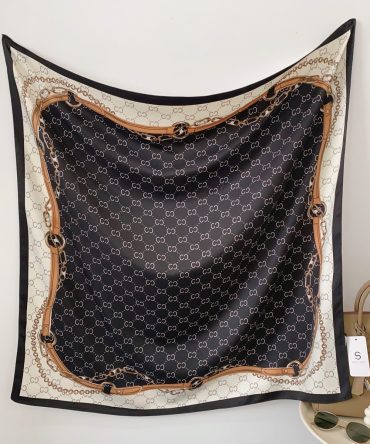
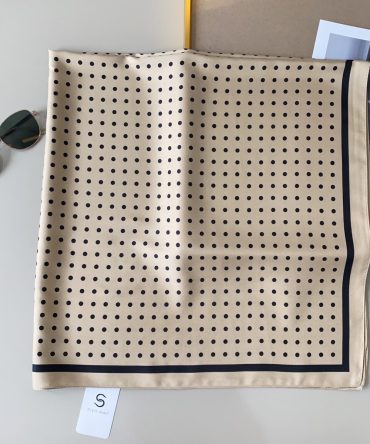
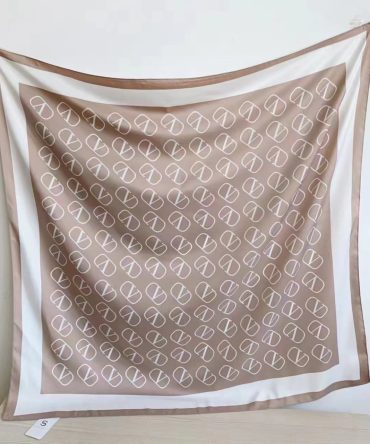
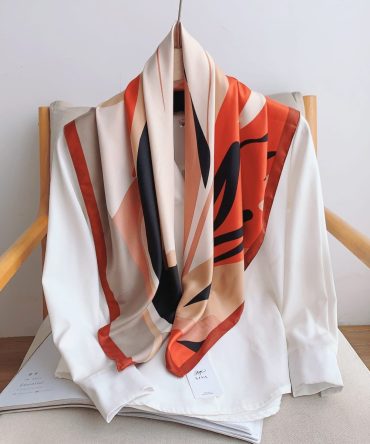
Print is really a finish rather than a fabric, but it deserves its own mention because it changes how a scarf reads. A printed head scarf in a bold geometric or floral pattern becomes the focal point of an outfit, which means the rest of what you're wearing should stay simple. Solid colours, by contrast, are the ones to keep in rotation for versatility, they go with almost anything and don't compete with jewellery or sunglasses. If you're building a small collection rather than buying one scarf, we'd suggest one strong print and two or three solids in shades that already exist in your wardrobe.
Sizing: coverage depends on the square
Head scarves aren't sized like clothing, but the dimensions matter more than shoppers usually assume. A smaller square, roughly 70x70cm to 90x90cm, is built for partial coverage, think hairline protection, a scarf tied over a ponytail, or a decorative accent knotted at the neck. It won't wrap fully around the head with room to tuck and tie securely.
For full hair coverage, you want either a larger square, from around 110x110cm upward, or a rectangular scarf that's long enough to wrap twice and still have tail left to secure. Rectangular shapes generally give more styling options for full coverage because the extra length lets you cross, wrap, and tuck rather than just knot. If you're unsure, sizing up is the safer call, a too-small scarf is genuinely hard to style, while a larger one can always be folded down.
How to tie a head scarf: a few methods worth knowing
There isn't one correct way to tie a head scarf, and honestly the technique should change with the fabric. Silk needs a firmer knot or a twist at the nape because it slides, while cotton holds a simple double knot without much fuss.
The classic bandana fold is the fastest option and works well with a square scarf and cotton fabric. Fold the square into a triangle, place the long edge at your hairline, and tie the two side points behind your head, tucking the third point under. It's the go-to for a beach day or a quick errand run, and it does the job of keeping hair back and shading the scalp without any real effort.
For a more polished look with a silk square, try the front-knot styling method: fold the square into a triangle, drape it over the head with the point at the back, bring the two ends forward under the chin, and tie a loose, slightly off-centre knot rather than a tight central one. This is the version that works with sunglasses and looks intentional rather than practical, it's the styling equivalent of a good blazer.
If you want fuller coverage, the wrap-and-tuck method suits a longer rectangular scarf best. Drape one end shorter than the other over one shoulder, wrap the long end around the back of the head and bring it forward, then tuck the tail in at the side or pin it discreetly. This gives more complete hair coverage than a knot-based style and tends to stay in place longer through a full day.
Whichever method you use, a couple of small pins at the temple or nape make a real difference in wind or air conditioning, and they're worth carrying in a bag if you're wearing silk specifically.
Colour and print, chosen with intention
Neutrals, camel, ivory, black, taupe, do the heaviest lifting because they pair with everything already in a wardrobe and don't date. These are the ones worth owning multiples of if you're wearing a head scarf regularly rather than occasionally. Jewel tones, emerald, burgundy, a deep teal, work well against darker outfits and photograph beautifully for evening or event wear. Prints, whether florals, abstract brushstrokes, or geometric repeats, are best treated as a statement piece rather than a daily rotation item, since the print itself is doing most of the visual work and can start to feel repetitive if worn constantly.
When to wear one
Daily wear calls for something low-maintenance, a cotton square or a mid-weight silk that holds its knot through a commute, school run, or office day. Travel is where a lightweight silk scarf earns its keep twice over, it works as a head covering on a flight, doubles as sun protection at the destination, and folds flat enough to disappear into carry-on luggage. For pure sun protection, whether at the beach, on a desert drive, or just walking between errands in July, cotton wins on comfort even if silk wins on looks. And for styling purposes, paired with sunglasses, a linen shirt, or a tailored coat, a silk scarf tied loosely does more for an outfit than most accessories twice the price.
Caring for your scarf
Silk should be hand washed in cool water with a mild detergent, or dry cleaned if the print is heavily saturated, and dried flat away from direct sun, which can fade colour over time. Never wring silk, press the water out gently instead. Cotton is far more forgiving, a machine wash on a gentle cycle in cool water is usually fine, though line drying keeps the fabric looking newer for longer than a tumble dryer would. For both fabrics, ironing on a low, appropriate heat setting (and always on the reverse side for printed silk) keeps a scarf looking crisp rather than lived-in.
Ordering from Layl
Everything in this category is priced in AED, with free shipping across the UAE on orders over AED 200. Delivery reaches Dubai, Abu Dhabi, Sharjah, and the rest of the UAE, typically within 1 to 3 business days. You can pay by Apple Pay, cash on delivery, or split the cost with Tabby or Tamara if you'd rather spread payments over a few instalments. It's a straightforward way to try a couple of fabrics or colours at once without committing the full amount upfront.
Frequently asked questions
What is the difference between a head scarf and a hijab?
A head scarf is a broader term covering any scarf worn on or around the head, for styling, sun protection, or partial coverage, and it doesn't follow a fixed shape or wrapping method. A hijab specifically refers to a head covering worn for religious modesty, usually wrapped to fully cover the hair and neck according to that purpose. In practice, many of the same fabrics and even the same rectangular or square scarves can be styled either way, the difference is in the wrap and the intention behind it, not necessarily the product itself.
What's the best fabric for a head scarf in UAE heat?
For most of the year, a lightweight cotton or cotton-voile scarf handles heat and humidity better than silk, since it breathes and absorbs moisture instead of clinging. Silk still works well indoors, in the evening, or for shorter outdoor stretches, and a lighter-weight silk (rather than a heavier satin-finish one) is more forgiving in summer than people expect. If you're outdoors for extended periods, cotton is the more comfortable daily choice.
How do I keep a head scarf from slipping?
Slipping usually comes down to fabric and technique together. Silk needs a firmer knot, ideally off-centre rather than dead centre, and benefits from a small pin at the nape or temple in windy conditions. Cotton grips better on its own but still slips on very smooth hair, in which case a thin headband worn underneath the scarf gives it something to hold onto. Tying the first knot slightly tighter than feels necessary also helps, since scarves tend to loosen naturally over a few hours of wear.
Can I buy a head scarf online in Dubai and pay on delivery?
Yes. Layl ships across Dubai and the rest of the UAE with cash on delivery available, alongside Apple Pay and instalment options through Tabby and Tamara. Most orders arrive within 1 to 3 business days, and orders over AED 200 qualify for free shipping.